






Key Takeaways:
- Choosing the right slingshot ammo is essential to making the most of your shooting experience. Steel is hard-hitting and reusable, but clay is best for shooting around in the woods.
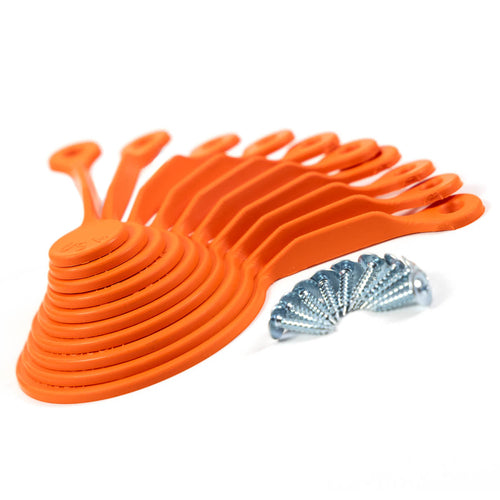
- Plastic training ammo is a great way to start a new shooter, and rubber training ammo can be a fun indoor alternative.
- SimpleShot ammo is the most consistent, precise slingshot ammo available on the market, being made specifically for shooting, not adapted from another application.
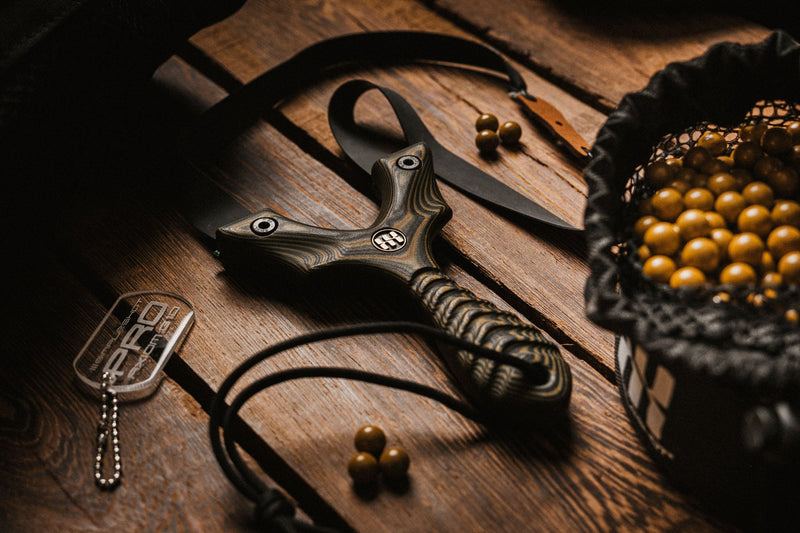
Slingshots are capable of shooting just about anything that can fit inside their pouch. Anything from steel ball bearings and clay shot to tiny ducks and firework snappers (don’t ask). But not all slingshot ammo is created equal, and choosing the right kind of ammo for you will seriously elevate your slingshot experience.
Before we jump in, this article will not discuss ammo sizing, as that’s more of a band tuning issue. Don’t worry, we’ll get to that another day! Alright, let’s go!
In This Article:
- A Word About Rocks and Other Random Objects
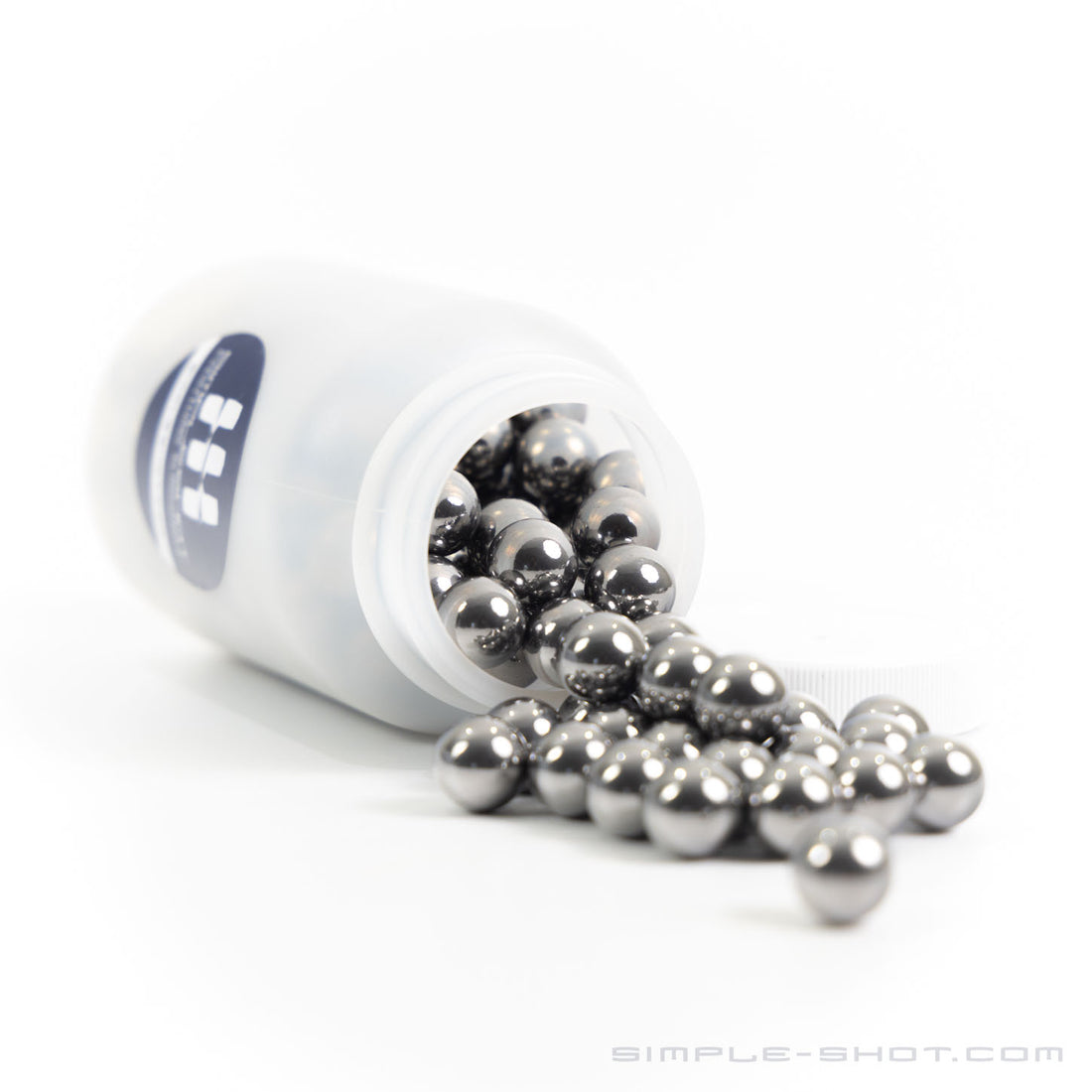
- Steel — the Perfect Daily Driver
- Clay — for Open-World Plinking
- Rubber — The World’s Sickest Fly Swatter
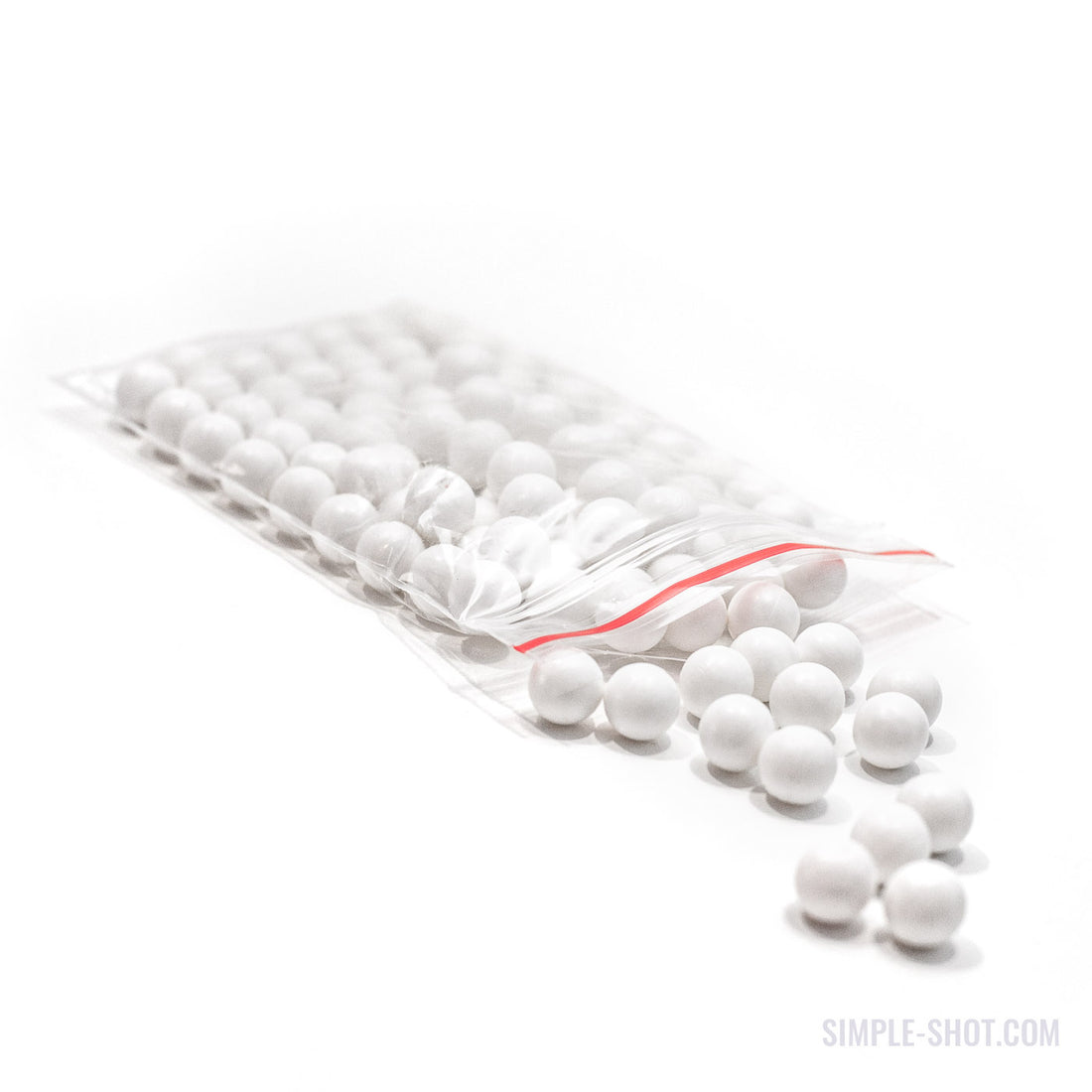
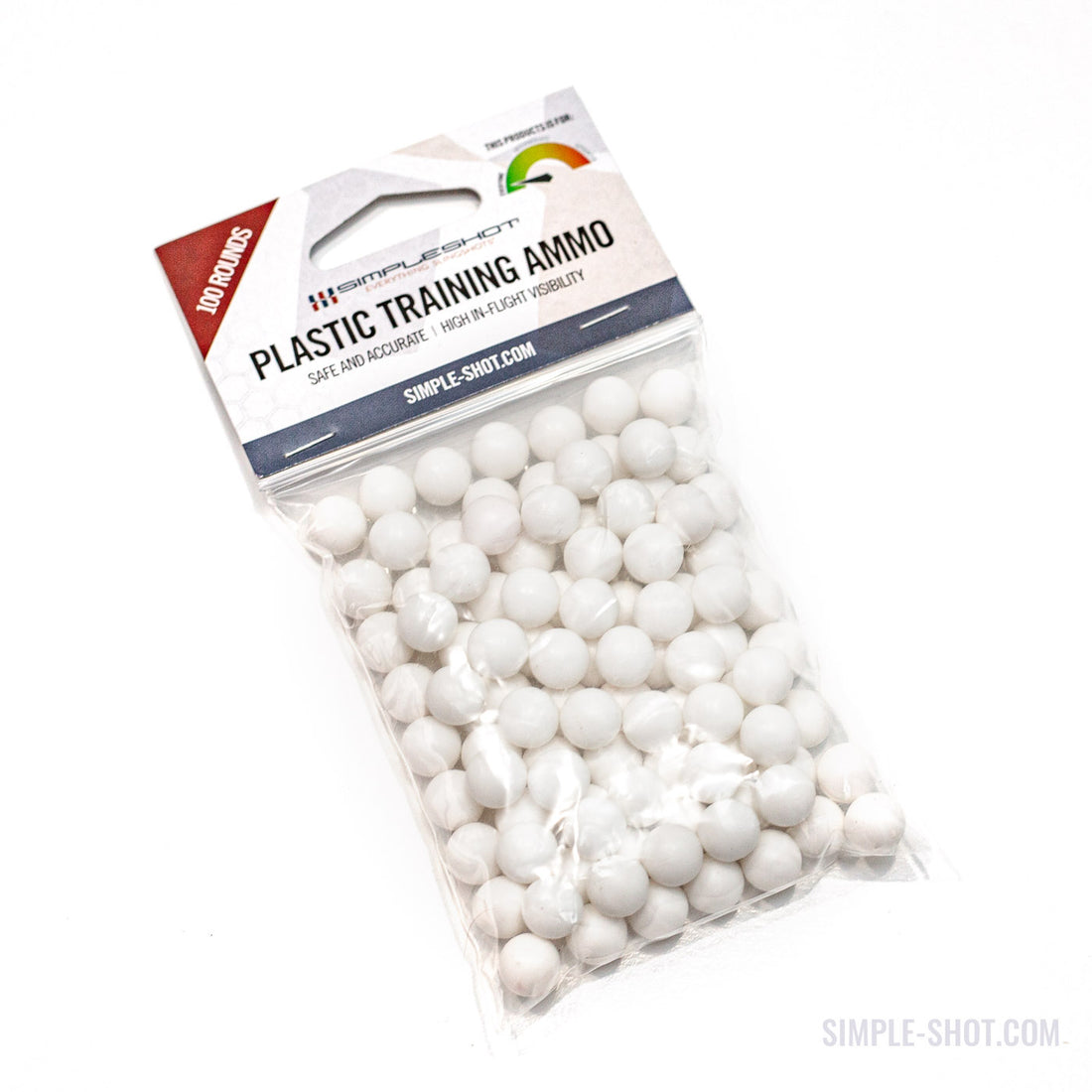
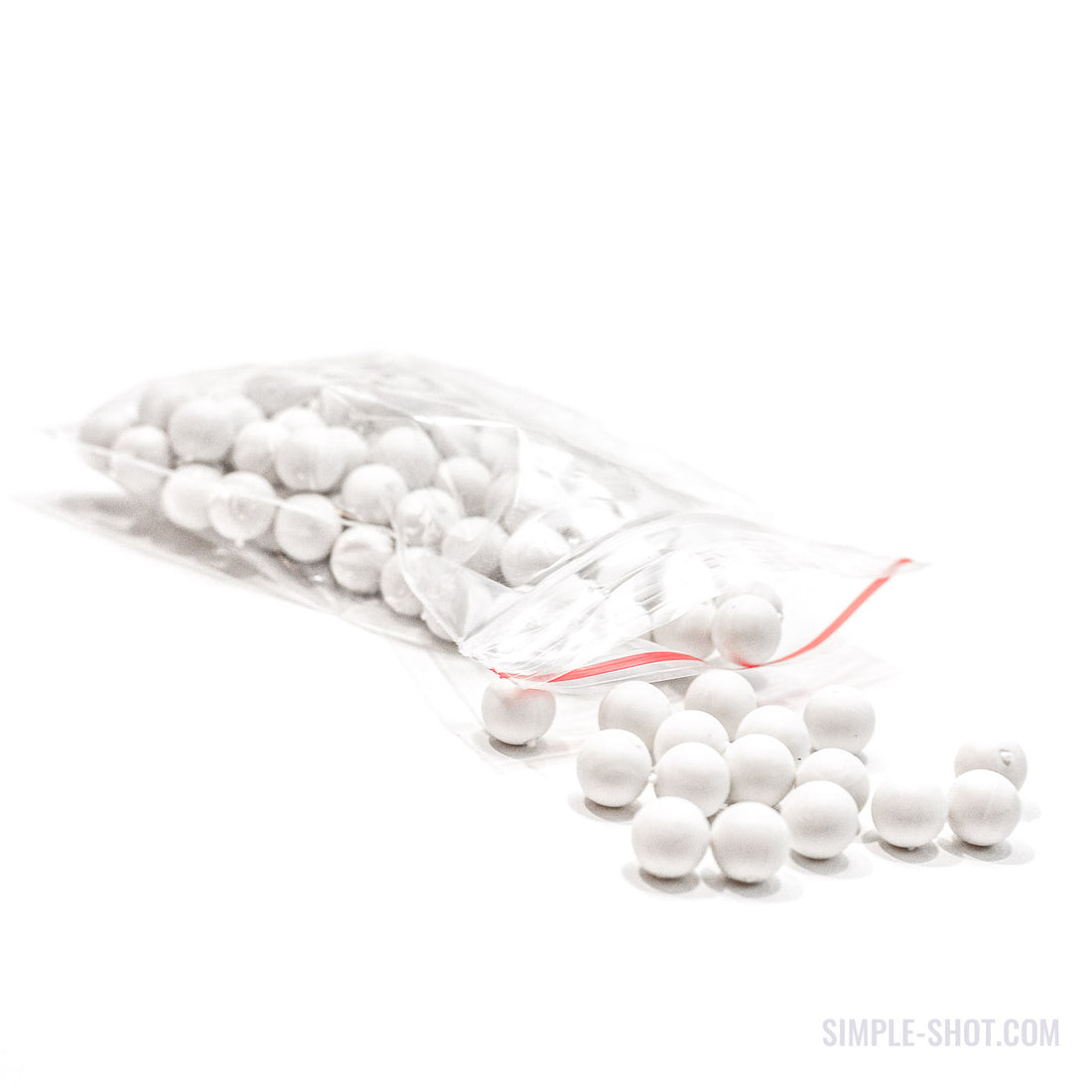
- Plastic — A Great Place to Start
- Marbles — Solid, but Outclassed
- Lead, Tungsten, etc. — Overkill for Most of Us
- Which Ammo is Right For You?
A Word About Rocks and Other Random Objects
As mentioned in the intro, your slingshot will definitely shoot rocks, unripe fruit, small toys, and more. But if you choose to, bear this in mind: consistency is everything, and you won’t find it here. When we talk about slingshot accuracy, we talk about a consistent anchor point, draw length, stance, and release so you can dial in your form and reach incredible accuracy. But rocks and other random stuff are not consistent, and will make you less accurate. It also chews up your bands way faster, which is super lame and often unsafe.
But yes, theoretically, your slingshot will shoot them. But you deserve better, and you’ll find it below!
Steel — the Perfect Daily Driver
Pros:
- Extremely durable
- Infinitely reusable
- Heavy enough for hunting
Cons:
- A bit more pricey up front
- Can rust when wet
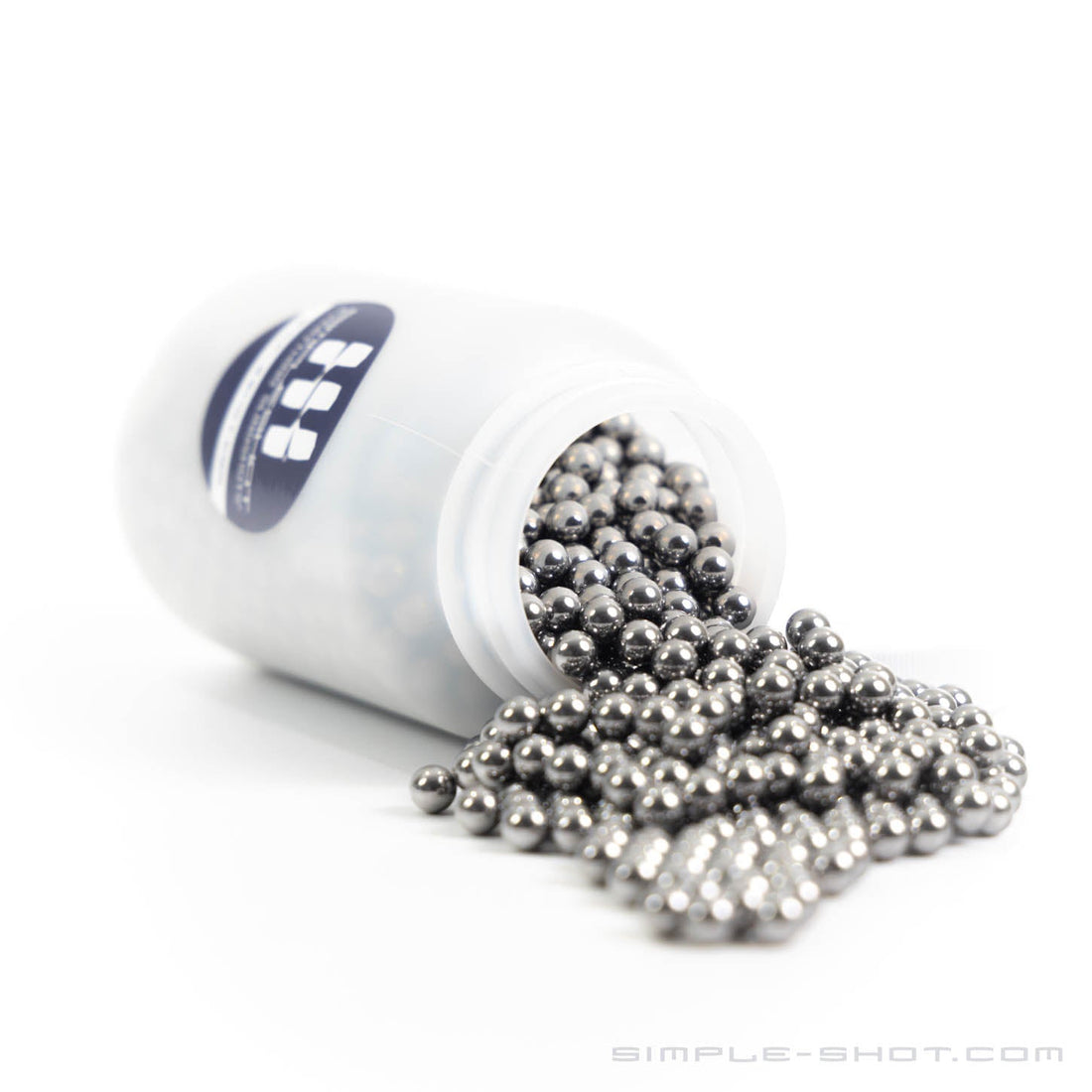
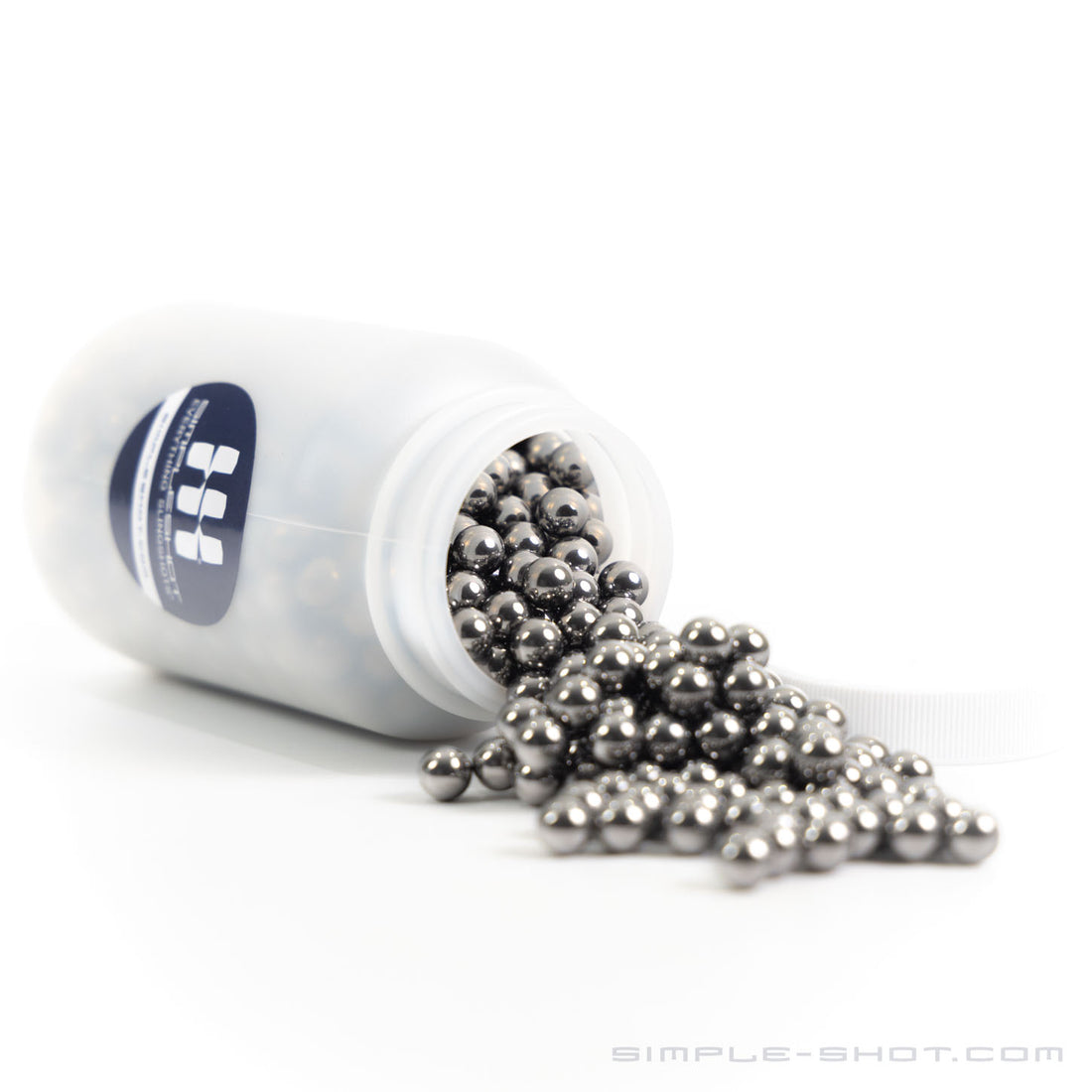
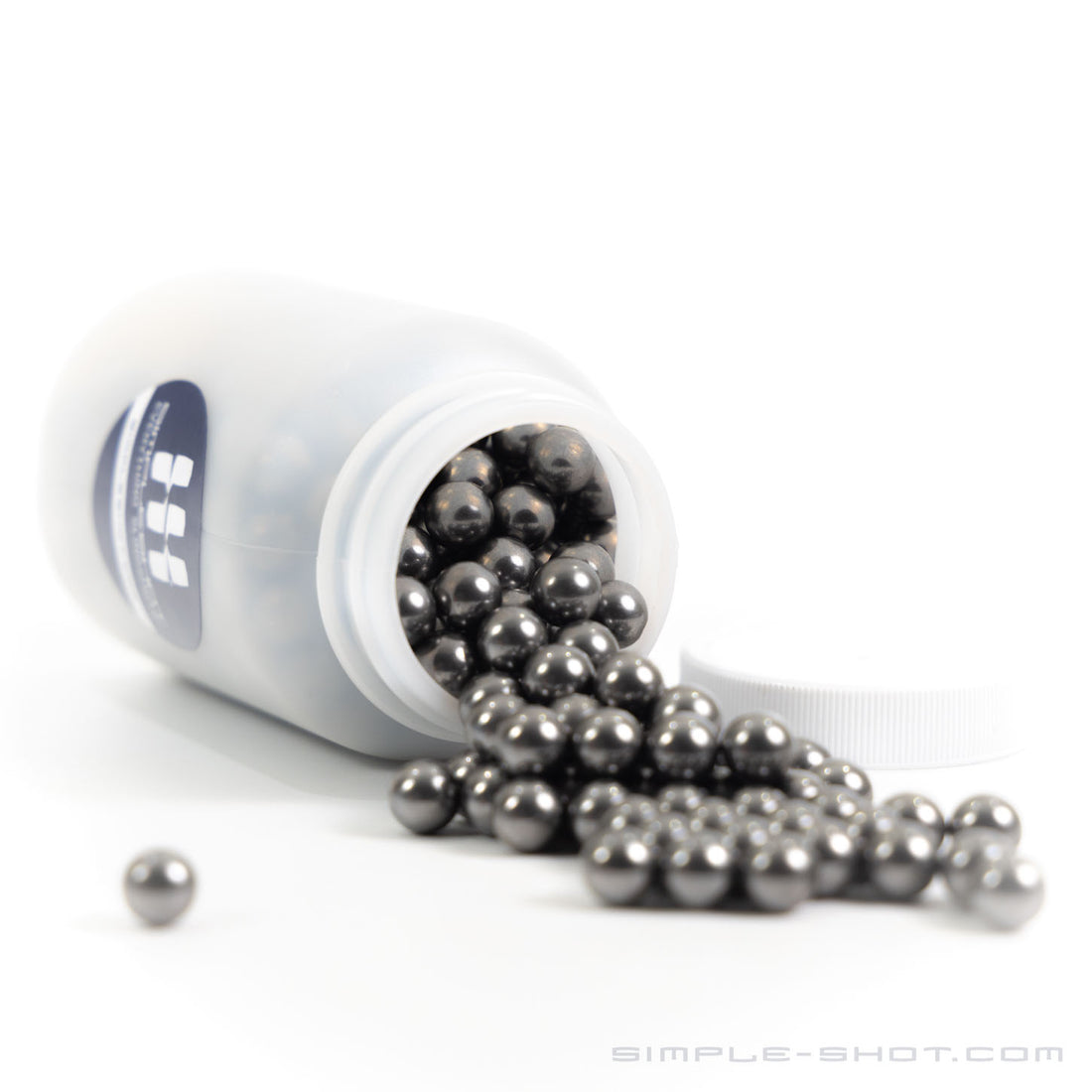
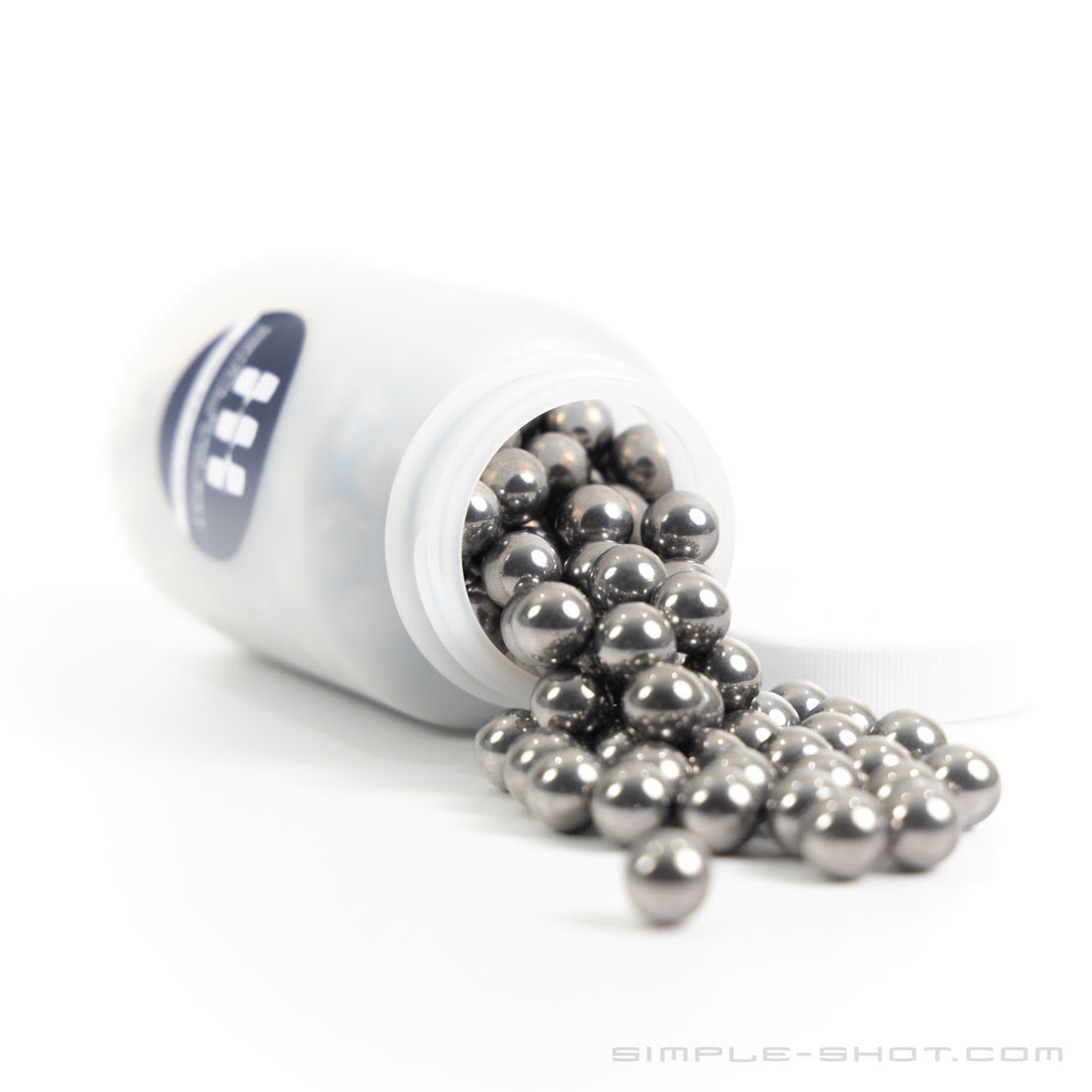
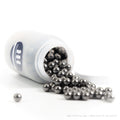
Steel is what most of us return to on the daily. It’s smooth and easy on your bands, and it’s magnetic, making it easy to manage. If you have a proper catch box, steel is also infinitely re-usable. Do keep it dry, steel ammo is almost always made of carbon steel, and it will rust if you let it.
Steel is perfect for the competitor and the hunter. Competitors love it because it’s heavy enough to trip knockdown targets and cut cans, and consistent enough to dial in for incredible precision. Hunters love that weight too. If you use a larger ball (⅜″+) with a nice strong bandset, good shot placement can land you clean, ethical harvests on birds, rabbits, and other small game.
Most steel “slingshot ammo” you find out there is low-grade rejects from ball bearing manufacturers which didn’t pass due to being off size or not perfectly spherical. SimpleShot steel is different. We work with suppliers and have a robust QC process to ensure that each shot is perfectly consistent. It is more expensive, but if you take care of it, it will last you literally the rest of your life!
Clay — for Open-World Plinking
Pros:
- Super affordable
- Gentle on targets
- Dissolves into the environment
Cons:
- Single-use only
- Turns into mud when wet
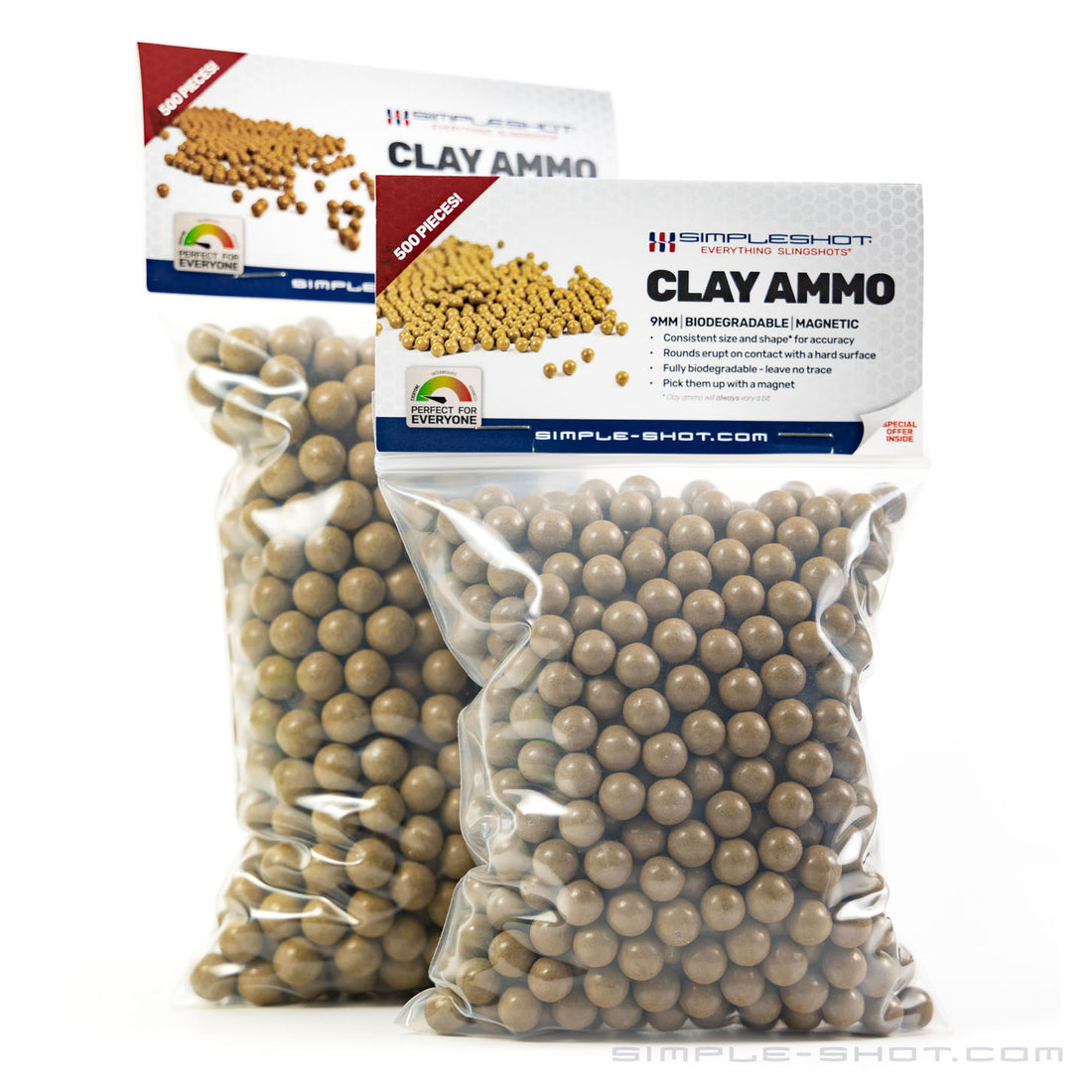
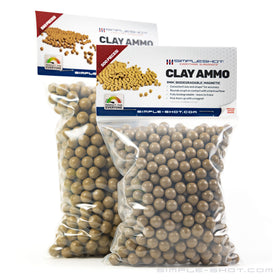
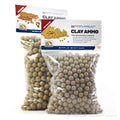
Clay ammo is often called “biodegradable” ammo, because when you shoot it, it tends to shatter, and with the next rainfall, dissolve completely into the soil below. It’s also way cheaper than any of the metal ammo. If you bring your slingshot hiking and like to shoot pinecones on the ground or rocks off the top of cairns, clay is the best pick. In the back yard, clay is super gentle on targets but still delivers the satisfying thunk you crave. It’s the plinker’s dream!
Clay ammo is not great for hunting. It’s just too light and breaks too easily. Also, do not get it wet, it will turn into mud. And whatever you do, don’t leave it in your pants pocket when they go through the laundry. Unfortunately it happens to leave suspicious brown stains. Don’t ask how I learned that one…
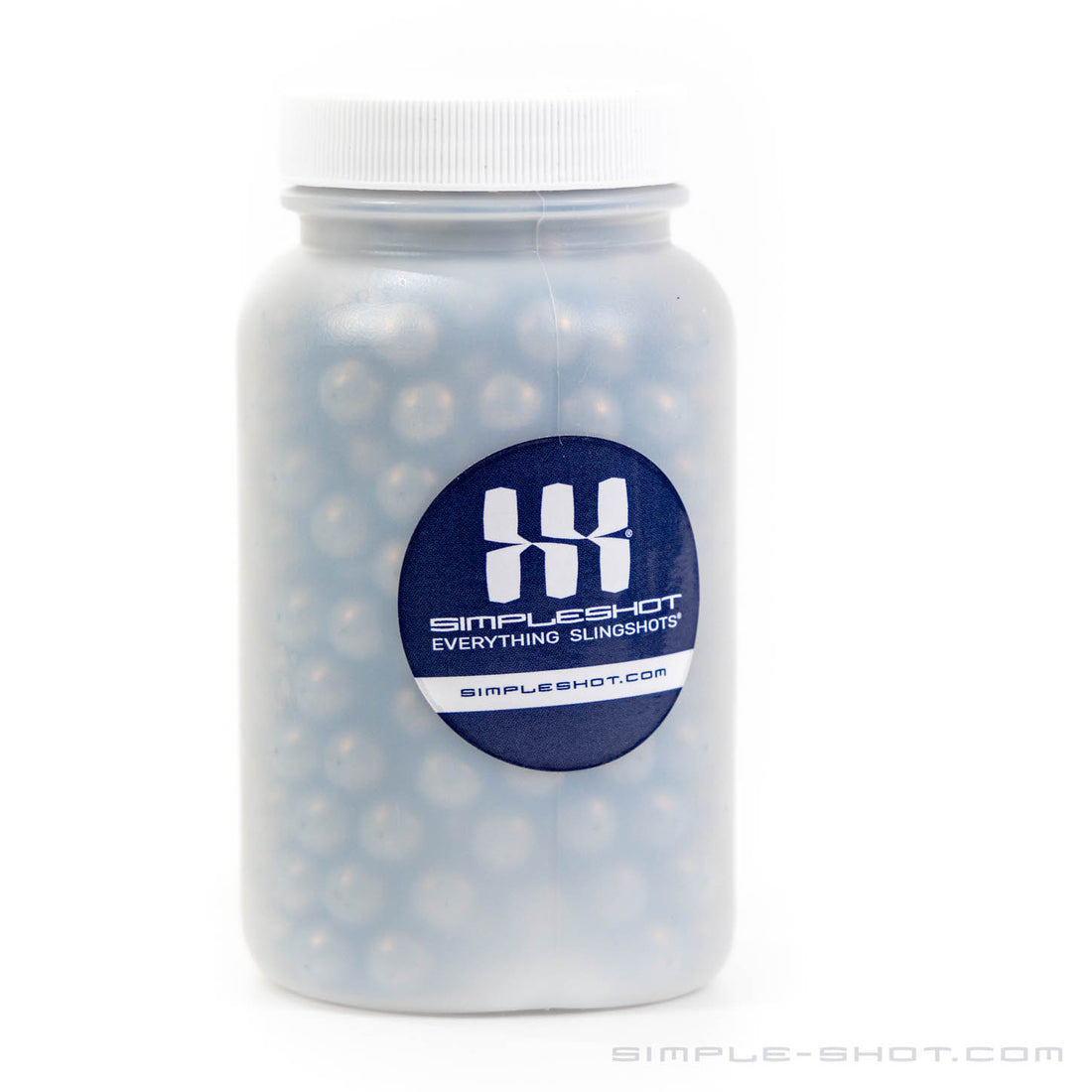
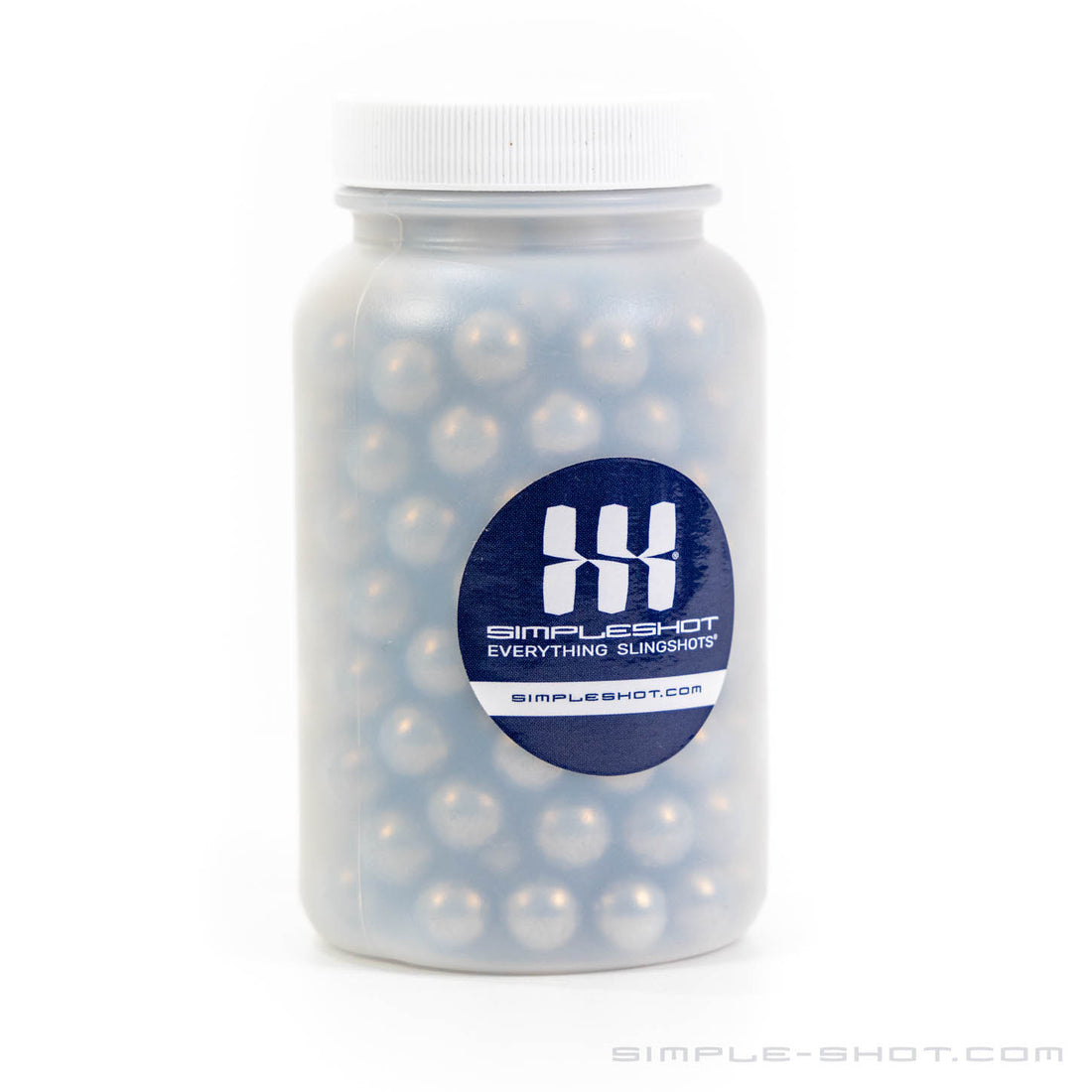
There is clay ammo, and clay ammo. SimpleShot clay is the latter. Most clay ammo is made in mass and has low standards for consistency, and often gets really dusty. Not only does that inhibit accuracy, but it also prematurely wears your bands. But at SimpleShot, we demand perfection out of our clay. It’s all perfectly round, gently fired to keep the dust down, and even has iron filings in it to make it magnetic. Once again, yes, it’s more expensive, and yes, it’s worth it!
Rubber — The World’s Sickest Fly Swatter
Pros:
- Soft and gentle on the environment
- High-viz
- Easy to shoot with
Cons:
- Easy to lose
- Too light to punch through many targets
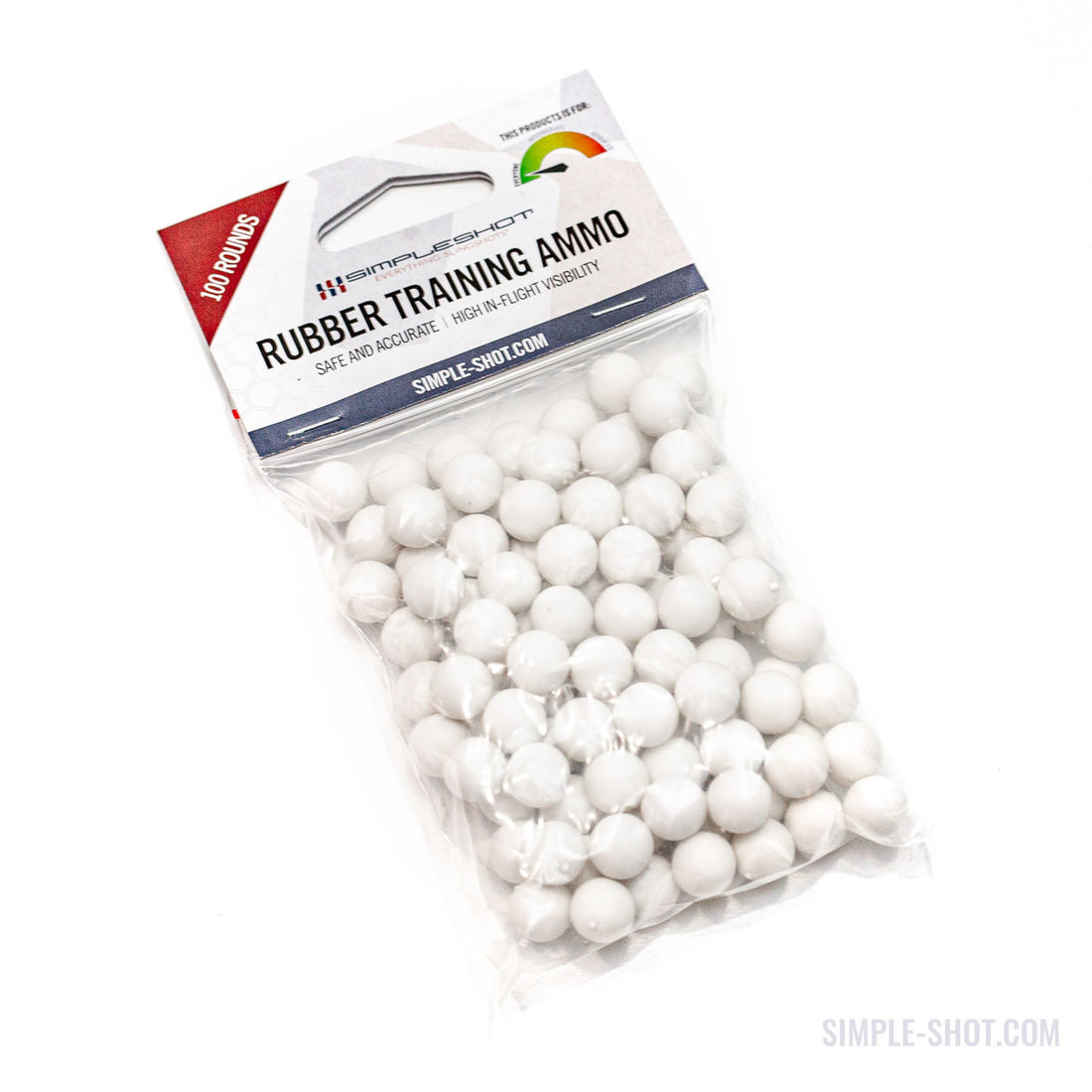
Shooting rubber training ammo is some of the most fun you can have with a slingshot. Paired with a lightweight bandset, this soft and squishy ammo is able to be shot indoors! Set up a shooting gallery of cups, see if you can hit the buttons of your couch cushions, or my personal favorite, hunt for flies! Soft and gentle enough to not damage drywall or windows*, but plenty fun enough for a good time inside on a rainy day.
Outside it can be fun too! It’s a great way to start someone shooting a slingshot if they’re afraid of harder ammo, and it’s also super gentle on things that aren’t usually considered “targets,” like the logo on your grill or the latch on your gate.
*I’ve never dented drywall or cracked a window with rubber, but that doesn’t mean you won’t. Remember to use extremely lightweight bands and use your brain. SimpleShot will not replace your window or drywall!
And before you ask, no you should not shoot people with these. If you must go PVP, extremely light bands and Nerf Rival balls are a much safer bet. But wear safety glasses and be smart, slingshots are more powerful than you realize.
Plastic — A Great Place to Start
Pros:
- Super easy to shoot
- Doesn’t damage targets
- Makes training technique easy
Cons:
- Too light to punch through targets
- Can get deformed and lose accuracy
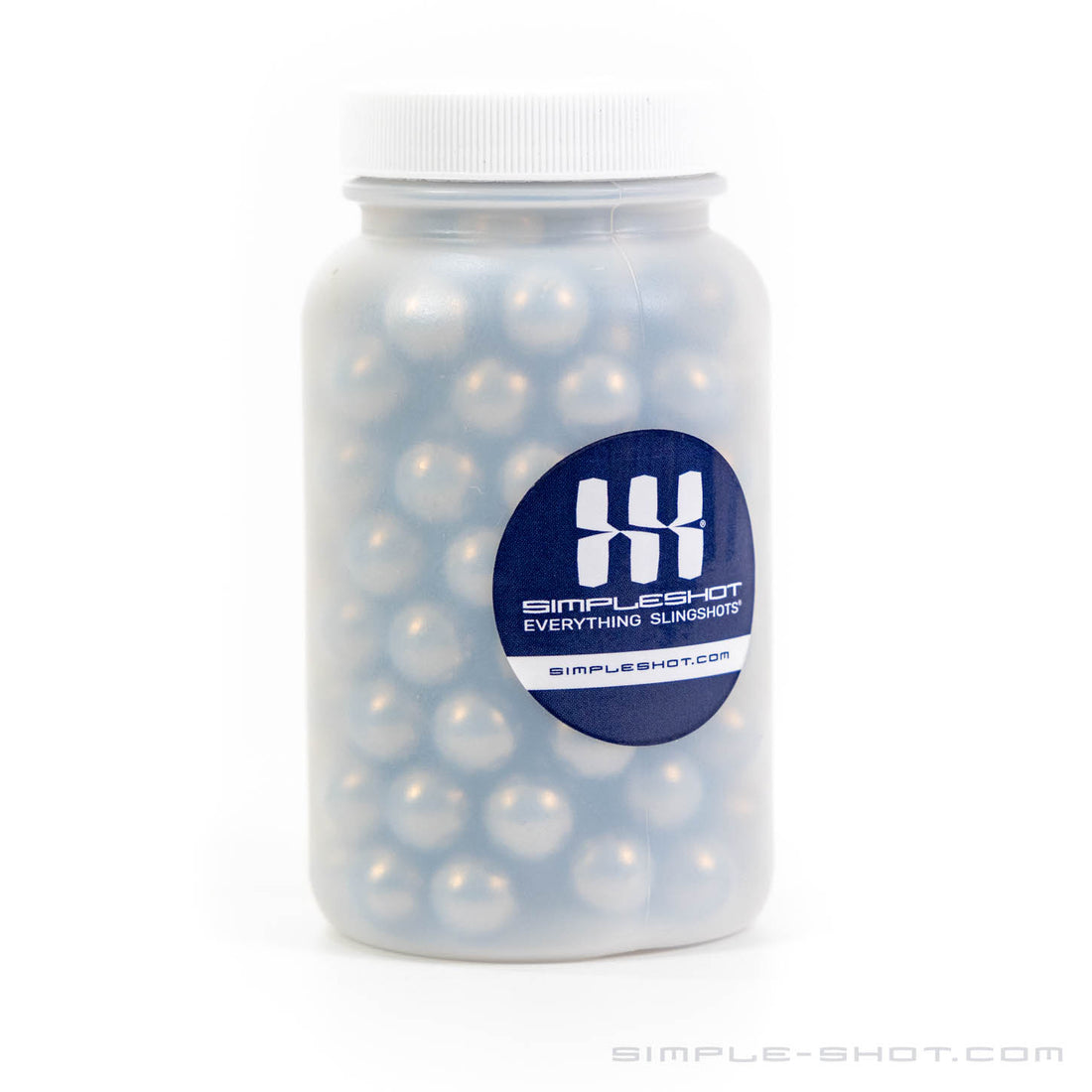
Plastic is the perfect ammo to start a kid on. Because it’s so light, you can pair it with an easy bandset, and kids can learn the fundamentals of shooting, get good velocity out of their ammo, and really experience the joy of slingshots. But it’s not just great for kids, adults love it because that light bandset allows them to fine-tune their technique with minimal muscular expenditure. That way when you move on to heavier ammo and bands, you’re ready to thread needles on the range!
Do bear in mind that plastic ammo is more fragile than steel, and much more bouncy. If you use heavy bands, you run the risk of deforming the plastic so it isn’t as consistent, or of ricocheting it into next week, never to be seen again. I recommend soft targets like paper or microfiber for plastic ammo!
Marbles — Solid, but Outclassed
Pros:
- Heavy and smooth
- Highly consistent
Cons:
- Fragile
- Expensive
Many of us remember shooting glass marbles when we were younger. They’re plenty heavy, very consistent, and easy to shoot. While you could do a whole lot worse for ammo, in my humble opinion, marbles are outclassed by modern alternatives. Marbles are glass, and they shatter when they hit things, yet they are more expensive than steel, which is infinitely reusable. If you want something that breaks down, clay does a better job of breaking down, and is significantly cheaper.
No hate on marbles, I’ve shot them too. But your money can go a lot further with other ammo types.
Lead, Tungsten, etc. — Overkill for Most of Us
Pros:
- Optimal ballistics
- Highly precise
Cons:
- Absurdly expensive
Some super-hardcores will pony up big bucks for super dense ammo like lead and tungsten. Because they are so dense, you can shoot the same weight projectile as steel for a fraction the volume, giving you greater speed and penetration. If you’re trying to see how far into ballistics gel you can punch a shot or looking for maximum damage on game, it might be worth considering. But for plinking? It’s totally overkill.
And because I know you’re curious, for tungsten bearings, you’re looking at north of $2 per piece. That’s orders of magnitude more expensive than steel! Lead is quite a bit cheaper, but it’s also carcinogenic…
Which Ammo is Right For You?
If you’re like most of us, I’d recommend a good amount of steel ammo for daily back-and-forth shooting in the yard and the odd squirrel hunt, and a big ol’ pile of clay for when you’re out and about. If you’re feeling jazzy, add a bit of the training ammo for rainy days and when you need to hone your technique. But other than that, don’t overthink it! Pick whichever ammo you vibe with most, and get to shooting!
About the author
George Muhlestein is the YouTube host for Blade HQ, where he has spent the last few years writing about knives. He’s also a longtime SimpleShot fan whose whole family shoots slingshots.