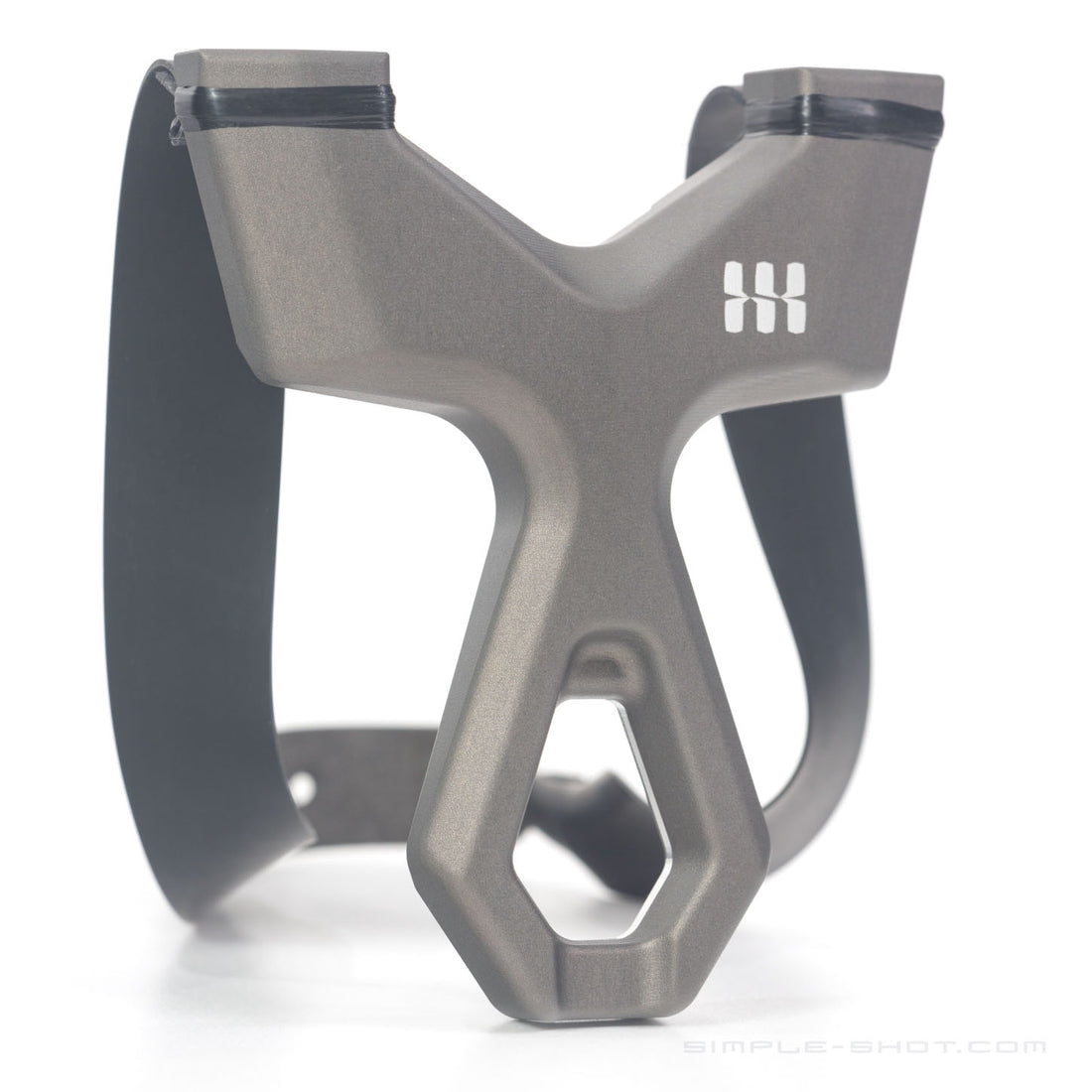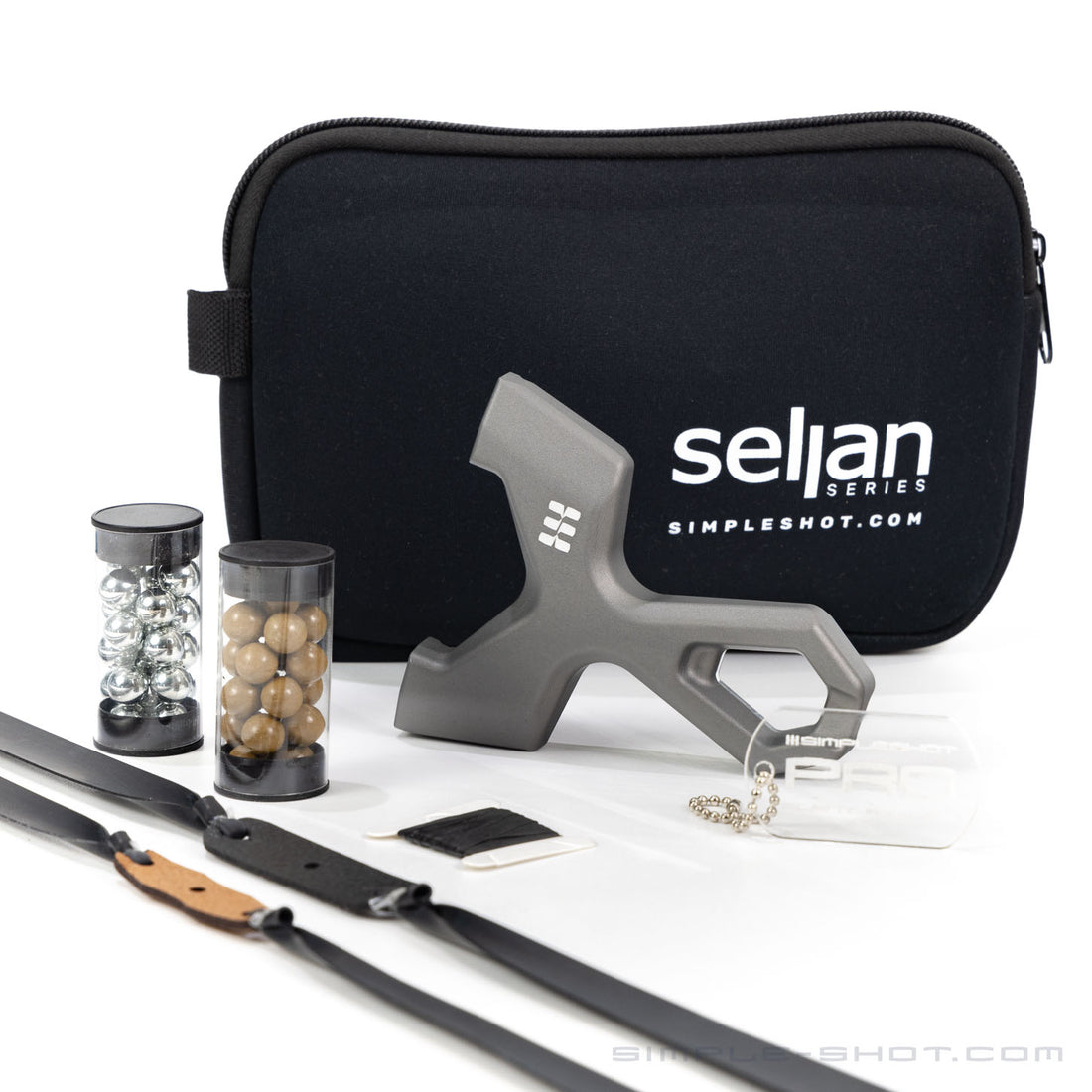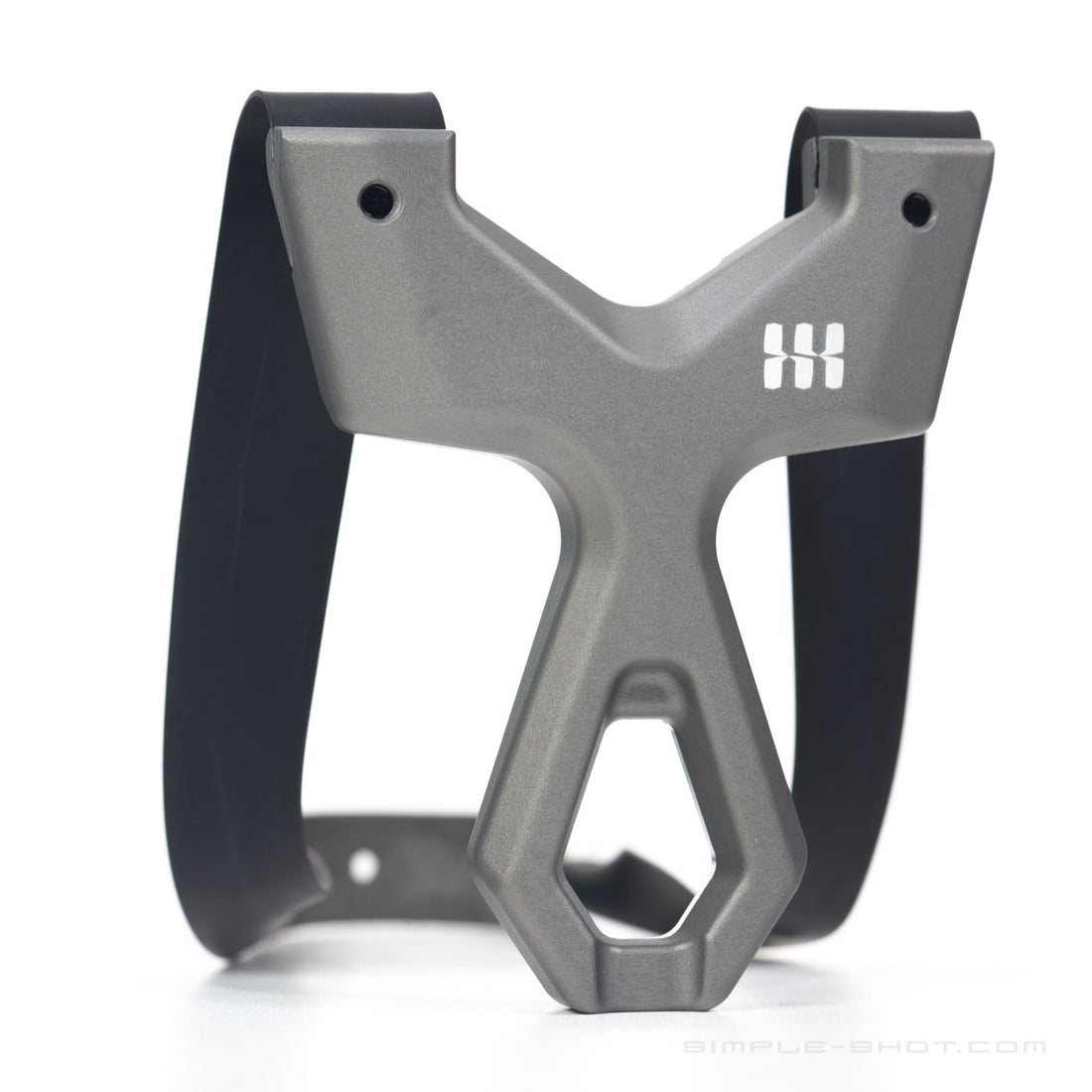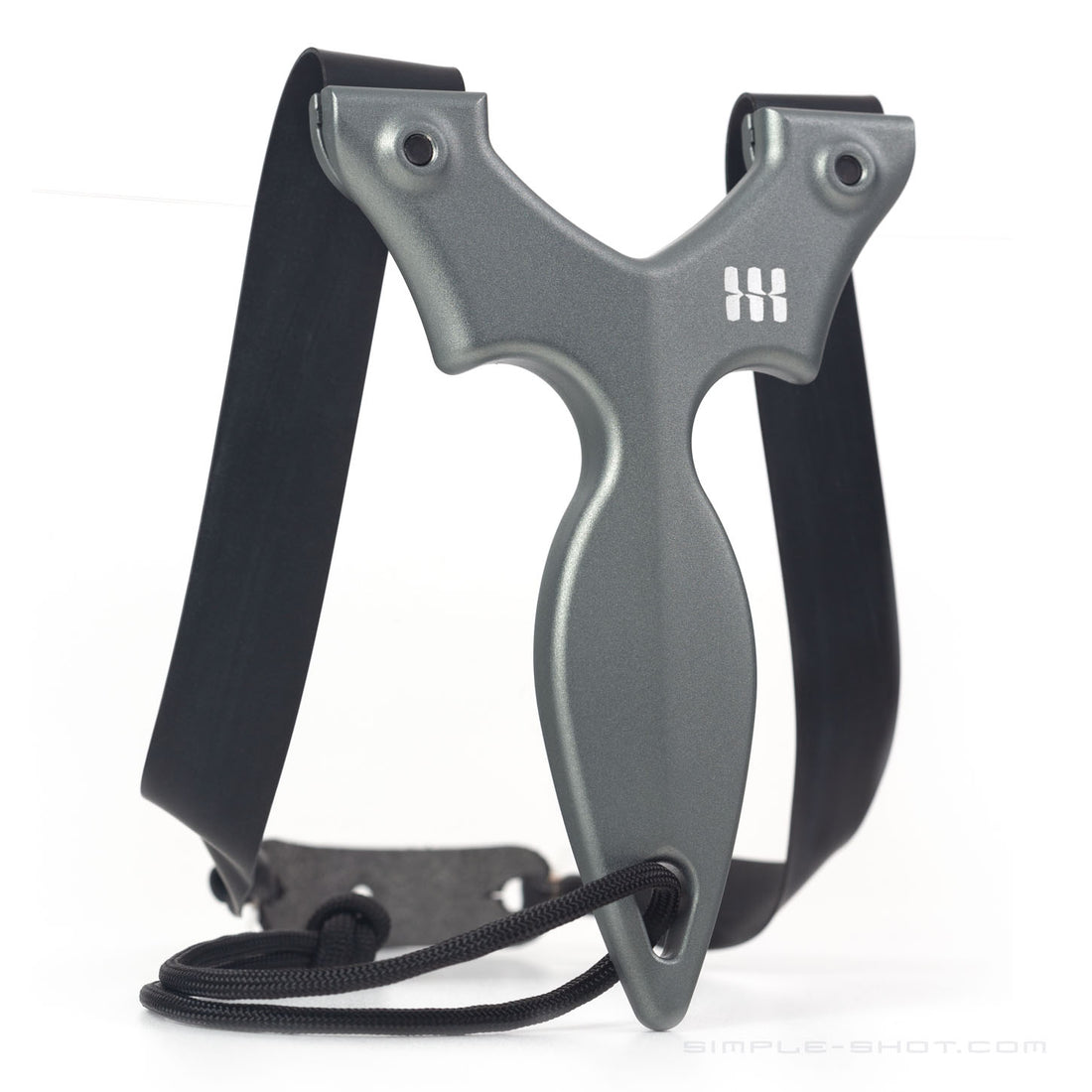
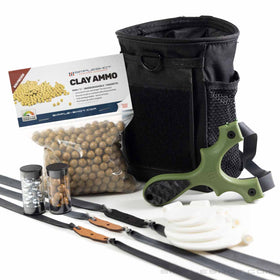
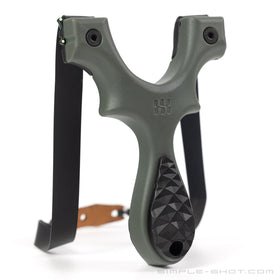
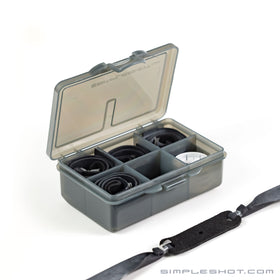
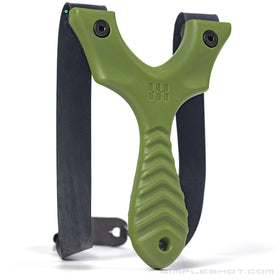

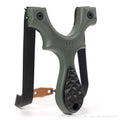
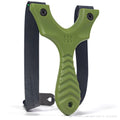
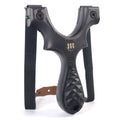


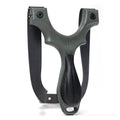


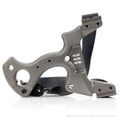
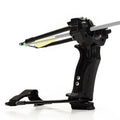

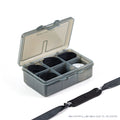




All 320 Slant Spartans are gone, and the design has retired. No second run, no re-release. What's left is the story of how it got made — a story that runs more than a decade, most of which Mark Seljan spent deciding it wasn't ready.
In This Article:
- The Millimeter
- When the Sport Changed
- The Decade of Not Yet
- The Sight That Taught Him Things
- Why It's Heavy
- Brass, and His Grandfather's Tools
- Why Only 320
- What to Do With Your First Shots
The Millimeter
Mark trained as an industrial designer in Hungary, in a program he describes as old school. No computers for the first years. Students sculpted and drew by hand, and he still remembers technical drawings on door-sized paper, laid out on the floor at five times scale because no desk was big enough. What that training drilled into him was a single question he still brings to every project: what is essential here, and what is merely present?
The Slant is his answer to that question in slingshot form. He talks about designing it less like engineering and more like drawing a logo — a silhouette, pushed a millimeter at a time until the outline says everything it needs to.
Which is how a finished slingshot ended up back at the start. The first version was fully vertical, hand-made, cast, and ready to show. Then he measured it against what he'd intended and found it one millimeter thinner. He remade the molds, the casts, the whole frame.
"People think, yeah, one millimeter, okay. But because of the design it affects the other parts. You pull one tiny string and the whole system changes."
That is the entire Slant project in one anecdote, and it explains why the Spartan took as long as it did.
When the Sport Changed
Ask Mark when small changes started mattering more than big ones and he lands on roughly 2015. Before that, slingshots were chasing power. He shot 25 and 28 millimeter bands with 10mm ammo as his target load, and paid for it in his shoulders and fingers. When he first tried 3/8" steel it felt like cheating.
Then latex improved, and shooters discovered something that reset everyone's expectations at once: a slingshot can be genuinely, repeatably precise. Mark's phrase for it is thread-cutting accurate.
Once that was on the table the whole discipline turned. The broad shapes were largely solved, so designers stopped reinventing outlines and started refining them — fork tip width, corner angles, where the mass actually sits. That's the weather the Slant grew up in, and it's why there's a lineage of Slants rather than one. Mark kept returning to it as the sport's expectations sharpened around him.
He was early on size, too. The smallest Slant was compact years before compact was a category, and by his reckoning it took about four years for everyone else to catch up.
The Decade of Not Yet
Several versions of the Slant existed only as prototypes, because nothing available could build them properly. He brought one out from the 2018 World Cup — a split-tip design that shot through the fork and over the top, flats, tubes and looped tubes, with a small bolt for an adjustable reference. The parts were printed in plastic and wore out.
The idea was right. The materials and the manufacturing weren't there. So it went in the drawer and stayed there, which Mark describes with more feeling than you'd expect from a man discussing tooling:
"It becomes a nagging thought in my process that keeps coming back — hey, do you remember me? Five years ago you designed me. Can you visit this project, start over again?"
Integration was the specific problem, and he's clear-eyed about why it's dangerous: overdo it and the thing becomes a gimmick, and you've spent a year arriving somewhere worse than where you started. His description of the process behind a clean object is worth keeping in mind the next time one looks effortless — many iterations, a lot of waiting and testing, and a long run of not strong enough, too bulky, not yet before anything is finally, actually simple.
The Sight That Taught Him Things
The Spartan's sight moves. One fastener, no special tool, a grid to index against, and enough range to put the fiber optic wherever your eye wants it. That sounds like a feature. It started as a fix for a problem Mark kept running into in competition.
You can't meaningfully change your wrist, your posture, or the way you naturally hold a frame — and more to the point, you shouldn't have to. So the frame moves instead. He built the components deliberately small and tight to the bands: the fiber optic is around 0.8mm, the ball just under a millimeter. Push a reference further out from the bands and it becomes a lever, amplifying whatever your hand is doing before the shot ever leaves.
What years of competition taught him is that your reference isn't fixed, because you aren't. Tired changes it. Nervous changes it. The sun coming from behind you rather than in front of you changes it. You can adapt by changing how you shoot, or you can adapt by changing the slingshot — and the second one turned out to teach him more:
"The adjustment of the adjustable reference became a learning tool for me."
Why It's Heavy
The Spartan runs 244 grams, which Mark is quick to say isn't heavy in the abstract. It's placed. The mass sits at the edge of your hand rather than out at the forks, and what you feel is less weight than a natural sense of where the frame is pointing.
It's there for one part of the shot in particular. Stance matters, walking up to the line matters, but he argues the draw is where a shot is made or lost, because the draw is the moment you commit. It's when you take quiet inventory — ammo seated, bands right, wind — and mass gives you something steady to take that inventory against. It also smooths the path of the hand as you push out, which is the part shooters feel first: the motion evens out, and you relax into the aim instead of rushing it.
Aiming, for Mark, is the good part. Two seconds he can talk about for two minutes.
And it's where the line that ended up on the product page comes from:
"It's not just throwing. It's not throwing the ammo — it's launching it. And there's very much of a difference."
Brass, and His Grandfather's Tools
There's a practical case for the brass. It's dense, it holds a thread precisely enough for the sight hardware, and it drops the mass exactly where he wanted it.
There's also a personal one. Mark keeps old tools that belonged to his grandfather, and what he likes about them is that they didn't stay new. Brass leaves the machine mint and then stops being mint the moment you use it, picking up a story as it wears. That's the argument for shooting a Spartan rather than shelving it — the one you take out of the box isn't the one you'll own in ten years.
The G10 does quieter work. Its texture comes from the machining rather than a coating, which is why it grips without being harsh, and why there's nothing on it to wear off.
Why Only 320
Three hundred was the target, which is where the name comes from. Building three hundred perfect frames means starting more than three hundred, because some won't clear quality control. 320 passed, and we weren't going to hold the extras back. Every one is serialized. Mark has number one. Nathan has number two.
The reason it couldn't be a larger run is the same reason it's good. This design doesn't survive value engineering — it can't be molded in plastic and it doesn't work in aluminum. The materials are load-bearing, not decorative.
Asked how it feels to make something most people will never hold, Mark went somewhere more generous than pride: he's glad it exists at all, and hopes it does something for the people who own one beyond hitting targets — some appreciation for design, and for details in general.
What to Do With Your First Shots
If you own one, this is the part worth reading twice, and it isn't about technique. It's about pace.
You can shoot it out of the box. Mark would rather you didn't rush it, because the frame will change how you shoot and you want to notice that happening. Respect the weight first — hurry a heavier frame and you'll overshoot the motion, correct too hard, and never quite work out why. One thing he does himself: hold it and raise and lower your arm slowly, paying attention to how your balance shifts. Fast movement hides that. Slow movement shows it.
Then treat the sight as a skill rather than a setting. It's the same discipline as archery or any precision sport — be accurate, and don't rush.
What the adjustment eventually teaches you is less about the slingshot than about you. Mark's own list, after years of paying attention: when he's tired he tilts his head more. When he's anxious about a score his weight drifts to his back leg until his front foot goes light, and his front hand goes with it. None of that is visible until something on the frame makes you go looking for it.
"Let's start learning each other's language. And then the dialogue starts. What happens if I adjust a little bit left, a little bit up? What happens if I change bands?"
The Run Is Closed
All 320 sold, and there won't be another. The Slant Spartan page is still up with the full specs, what shipped in the box, and the sign-up for the next limited edition — we do this rarely, and when we do it goes quickly.
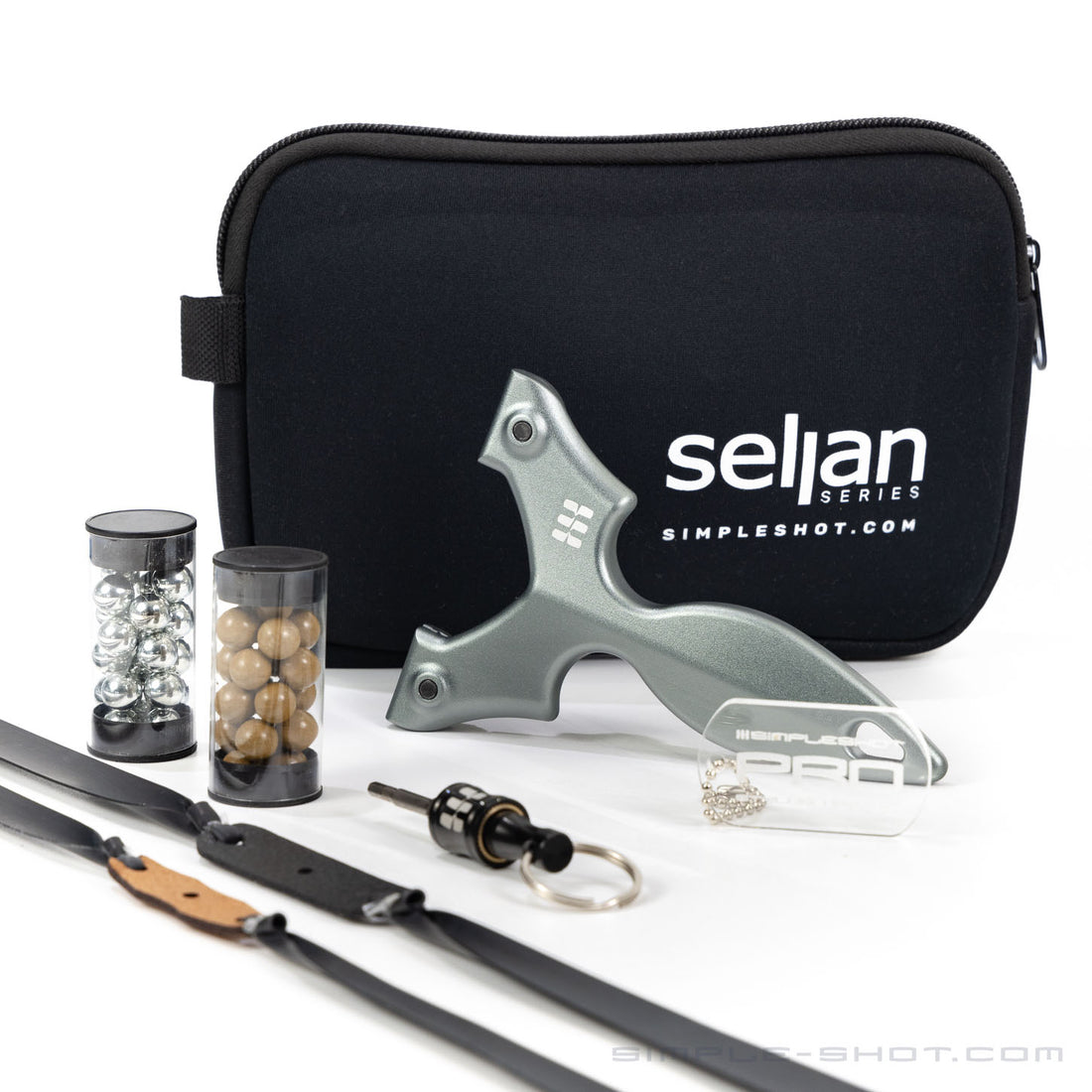
Already own one? Two parts stay stocked: the Fiber Optic Replacement three-pack, and the 2.5 mm Hex Head Tool that drives every fastener on the frame including the sight. For anything else, get in touch.
The rest of Mark's work lives in the Seljan Series.
Watch the Conversation
Nathan and Mark sat down for about fifty minutes before the run went on sale — the design process, the years of prototypes, and a look at Slants going back to the first one.
Slant Spartan FAQ
Is the Slant Spartan still available?
No. All 320 sold and the design has retired, with no second run. The Slant Spartan page has the full specs and the sign-up for our next limited edition.
Who designed the Slant Spartan?
Mark Seljan, a Hungarian industrial designer. The Spartan came out of more than ten years of Slant iterations.
What is the Slant Spartan made of?
G10 and solid brass. The brass adds weight where Mark wanted it and develops a patina as you shoot.
How much does the Slant Spartan weigh?
244 grams, with the mass placed at the edge of your hand rather than out at the forks.
Does the Slant Spartan shoot over the top or through the fork?
Through the fork only, with an adjustable fiber optic sight.
How many Slant Spartans were made?
320, each one serialized. Mark has number one and Nathan has number two.
Can I still get parts for my Slant Spartan?
Yes. The Fiber Optic Replacement three-pack and the 2.5 mm Hex Head Tool stay stocked.